3 Beluga Whales spotted in the Narragansett Bay
By: Melissa Randall
mrandall@abc6.com
@MRandallABC6
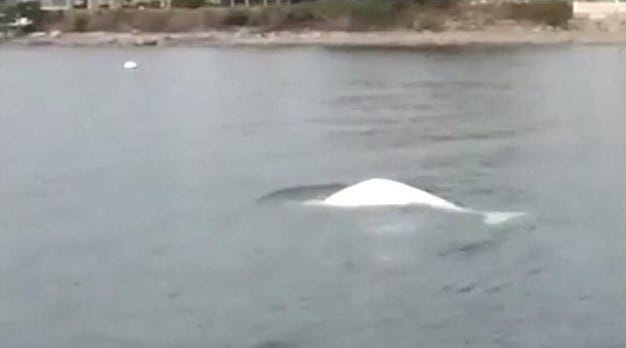
An incredible sight. Beluga Whales spotted just off the coast of
“I walked back to the end of the docks and looked below my feet and there are these two giant white whales!” said Matthew King, who spotted the whales.
“It was pretty shocking. We didn’t even know what they were at first. They were just giant brilliant white fish,” said Dave DeSalvo, who spotted the whales.
Matthew king and Dave DeSalvo were moving floating dock’s Saturday morning when all of the sudden three beluga whales appeared out of no where. The boaters were a mile and a half north of the
“Thank goodness we had a video because a lot of people told me ‘I’d of never believed you!’ But now they do,” said King.
In fact that video caught the attention of the mystic aquarium that sent a team to
Typically the researchers have to go all the way to the Arctic to be able to see beluga’s in the wild so having them right here in their back yard is very exciting.
It’s an opportunity to really assess what we’ve been learning up in the arctic and translate some of those behaviors that we observe in their natural environment to what we’re seeing down here,” said Tracy Romano of Mystic Aquarium.
The team from mystic had three sightings of their own in
“They could have gotten lost. They could be chasing food. They could have found a really good spot to eat and just kind of followed it down south. We really don’t know and that’s one of the biggest reasons we’re here,” said Justin Richard, a Graduate Student working with Mystic Aquarium.
Interestingly this is not the first beluga whale sighting in
© WLNE-TV 2015