Governor unveils FY 2020 budget
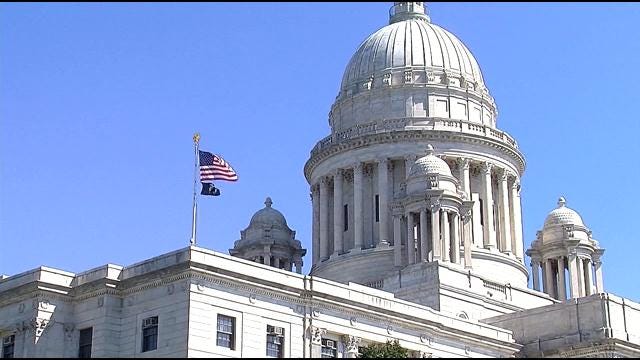
PROVIDENCE, R.I. – Governor Gina Raimondo unveiled her $9.9 billion budget for fiscal year 2020 to the General Assembly on Thursday.
General government expenditures are up $44.5 million, including an additional $21.7 million in reimbursements to cities and towns for the car tax phase-out.
CAR TAX
Phasing out the car tax will cost $78 million. It’s a bit of a change from the original funding formula so some people won’t get as much relief, but officials say we are still on track to phase out the tax by 2024.
NETFLIX TAX
The governor aims to apply a sales tax to streaming services, digital downloads and in-app purchases. Shopping online will also cost you more, thanks to a Supreme Court decision. Any company that yearly sells more than $100-thousand worth of good to Rhode Islanders or makes more than 200 sales here would tack on the seven-percent tax.
RHODE ISLAND PROMISE
Gov. Raimondo wants to expand her Rhode Island Promise program to adults looking to attend CCRI ($2 million) and RIC students in their final two years of tuition ($3.3 million). The current program of funding CCRI tuition costs $7.9 million, which brings the expanded program’s overall price tag to $13.2 million.
CIGARETTE TAX
The excise tax on cigarettes would be raised to $4.50 per pack from $4.25. Additional taxes are being imposed on cigars and e-cigarettes. These changes are expected to generate $4.6 million in revenue.
SPORTS BETTING
The governor wants to expand sports betting to online and mobile. The proposal would allow adults who set up an account at Twin River casinos in-person the opportunity to place a sports bet using a computer or mobile device within the state – which would bring an estimated $3 million in revenue. Sports betting in-person and remotely is estimated to generate about $30 million in revenue.
DCYF
The embattled DCYF’s budget ($228.6 million) is $10.4 million less than the revised budget of last fiscal year ($239 million). The revised budget proposal is based on what was actually spent aligned with the most recent projections of how much more needs to be spent. DCYF is also anticipated to save $4.9 million in the fiscal year due to restructuring and federal training opportunities. “We believe the cuts that we’re facing are things that the department can absorb without sacrificing anything about health or safety or the quality of services that we’re delivering,” explained DCYF Director Trista Piccola. “Investments in anything that helps with the economic prosperity of families is going to help the families of DCYF.”
SCHOOLS
The FY 2020 funding formula adds $30 million year-over-year for Rhode Island’s schools.
UNIVERSAL PRE-K
The governor wants to phase in universal pre-K by the end of her final term. The state is already spending $7 million a year to send more than 1,000 students to all-day pre-K. Her expansion plan tacks on another $10 million each year. So by year four, when it’s fully funded, it will cost roughly $47 million. Raimondo hopes the cost would eventually be integrated into the funding formula.
MARIJUANA
The governor wants to legalize recreational marijuana by January 2020. This would involve a start-up cost of $7.3 million. The adult marijuana market is expected to yield $3.6 million for state expenditures in the second half of the fiscal year. The share dedicated to municipalities is expected to be $2.1 million.
MEDICAID
To protect against any changes to the Affordable Care Act, the FY 2020 proposal includes an individual mandate to ensure Rhode Islanders have health coverage. The governor wants to charge large, for-profit companies for each employee who is enrolled in Medicaid. Employers with fewer than 300 employees are exempt.
The employer would be charged 10-percent of the employee’s wages, capped at $1,500 per employee per year. This would bring an estimated revenue of $15.6 million. About 140 companies would be affected by this new mandate, according to officials.
MUNICIPAL REVENUE, PILOT AID
The governor is proposing to enable legislation providing cities and towns the option to levy tax on non-mission property of tax-exempt non-profit hospitals and universities (e.g. retail storefronts, leased office space, vacant land). This would bring about an estimated $150 million annual in property tax revenue.
Thus, the governor is proposing a reduction of $6 million in state PILOT aid, bringing the total to $40.8 million.
© WLNE-TV 2018