URI Scientists Studying Indonesian Volcano Collapse, Tsunami
By: Tim Studebaker
Facebook: @TStudebakerABC6
Twitter: @TStudebakerABC6
Email: tstudebaker@abc6.com
NARRAGANSETT, R.I. (WLNE) –URI volcanologist Steven Carey and tsunami expert Stephan Grilli were planning a trip to Indonesia to study the 1883 eruption of the island volcano Krakatoa, and the tsunamis that followed.
Then, their plans changed.
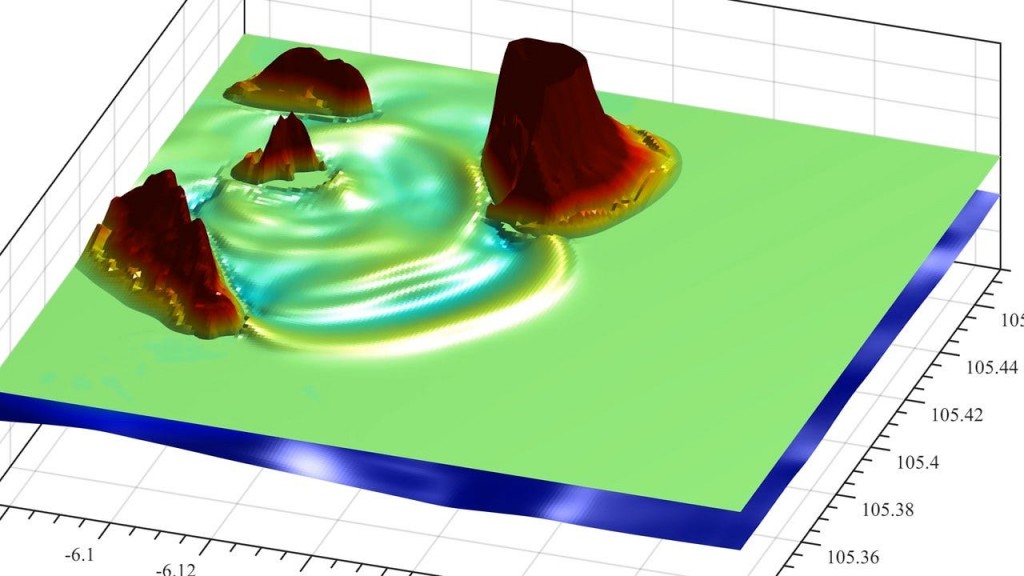
URI Graduate School of Oceanography Professor Steven Carey, PhD says, “Anak volcano, which is a small volcano that grew inside the caldera of the 1883 eruption, all of a sudden that collapsed on December 22 and generated a significant tsunami that killed over 400 people.”
It’s an event that Carey says is relatively common from a geological standpoint.
Carey says, “Volcanoes are constructed very poorly. They’re made of layers of lava flows, dense lava flows, and volcanic ash deposits. They have very steep slopes, and so when they build up to a critical level, they’re prone to collapse.”
Now, they are working to get there sooner rather than later to try to build their understanding of tsunamis caused by collapsing volcanoes, which may lead to better warnings. It’s an important opportunity for Grilli who has been hard at work modeling potential sources of tsunamis along the east coast of the US, including other volcanic islands.
URI Department of Ocean Engineering Professor Stephan Grilli, PhD says, “One of them is in the Canary Islands, a large volcano called Cumbra Vieja. That volcano is known, based on history, to have collapsed. And so we simulated that collapse, and this would be a major tsunami for the East Coast.”
Grilli says the Indonesia collapse gives them a chance to test their computer models for accuracy.
© WLNE-TV / ABC6 2019