Massachusetts reports 2nd death from mosquito-borne virus
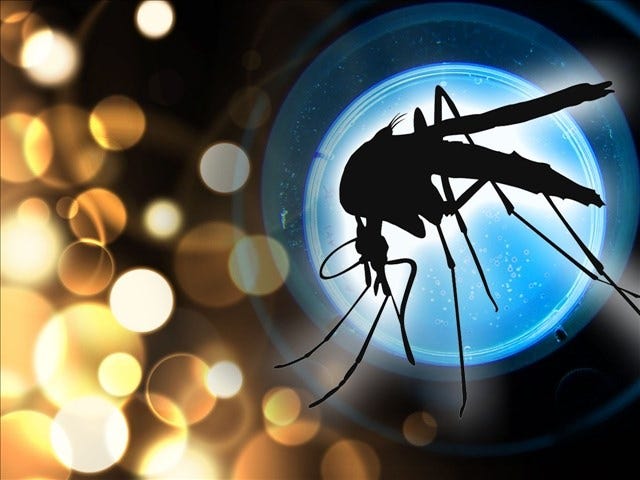
BOSTON (AP) – Massachusetts public health officials say a second person has died from a rare, mosquito-borne virus.
The state Department of Public Health said Friday that laboratory testing has confirmed the case is the 10th human incidence of Eastern Equine Encephalitis virus, commonly known as EEE, this season.
Officials say the victim was a man in his 70s from Bristol County.
The agency says there have also been eight confirmed animal cases of the virus, which can lead to serious brain damage or death.
There are 35 communities now at critical risk , 40 at high risk, and 128 at moderate risk for the virus.
State officials are conducting aerial spraying for mosquitoes Friday and through the weekend in Plymouth and Bristol counties.
Officials also said Friday they’ve confirmed the state’s second human case of West Nile virus.
Meanwhile, as planes are prepped to spray all the communities in Massachusetts, 12 communities in rhode Island that are considered a critical risk for the virus is waiting until next week until aerial spraying will be conducted for the second time this year in the Ocean State.
To give some perspective, the state has only performed aerial spraying once in the last 20-plus years, and it was only in Westerly.
In Rhode Island, there have been three confirmed human cases of EEE. One of those cases resulted in the death of a West Warwick woman.
The Rhode Island DEM announced that a second aerial spraying is required, based on the evidence they have.
“Additional mosquito pools testing positive, three deer testing positive, which is an unusual circumstance,” said Ken Ayars, Chief of the Agriculture Division with the RI DEM. “Waiting for aircraft availability, weather to line up. We’re projecting the very first part of next week.”
The communities that will be sprayed include West Warwick, Warwick, Cranston, East Greenwich, West Greenwich, Coventry, Scituate, Charlestown, Richmond, Hopkinton, Westerly, and South Kingstown.
Even with the cooler evenings, Ayars said the virus isn’t going anywhere.
“The risk will be there as long as mosquitoes are flying in the environment and that will happen until first frost,” he said. “Definitely. [EEE] is out there right now.”
The state is receiving $170,000 in federal funding to help pay for the spraying, but Ayars said the state will be looking for more federal assistance.
As it stands now, the two aerial sprayings will cost the state between $350,000 and $400,000.
This story contains information from the Associated Press.