Residents advised avoiding Carbuncle Pond and other bodies of water
By News Staff
Email: news@abc6.com
Twitter: @ABC6
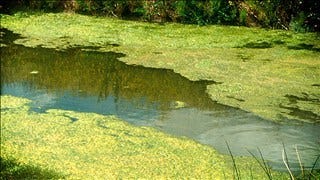
COVENTRY, R.I (WLNE) – The Rhode Island Department of Environmental Management (DEM) and The Rhode Island Department of Health (RIDOH) are advising people to avoid contact with Carbuncle pond because of the potential risks of blue-green algae.
The Advisories that RIDOH and DEM issued for several more bodies of water in Rhode Island are still in place.
The Bodies of water under advisory are:
Almy Pond in Newport, Sisson Pond in Portsmouth, Mashapaug Pond in Providence, JL Curran Reservoir in Cranston, Melville Ponds in Portsmouth, and Polo Lake, Japanese Gardens, Pleasure Lake, Roosevelt Lake, and Elm Street lake all in Roger Williams Park in Providence.
RIDOH and DEM said with the exception of Deep Spring lake, the ponds in Roger Williams Park are all interconnected and visitors should remain alert for potential bloom conditions in any area of the park.
The samples collected from Georgieville Pond in Smithfield do indicate that blue-green algae levels are low, but the public is advised that those conditions may change quickly, and waters that are cloudy, green or with surface scums should be avoided.
Contact with water that contains the algae commonly causes irritation of the skin, nose, eyes, and throat.
Common health effects associated with ingesting water containing algal toxins include stomach ache, vomiting, diarrhea, and nausea. Rarer health effects include headache, fever, dizziness, liver and nervous system damage.
RIDOH and DEM say that young children and pets are at particular risk for health effects if they come in contact with the toxin.
RIDOH and DEM advise anybody who comes in contact with the water to rinse their skin with clean water as soon as possible and wash their clothes.
Similarly, residents are advised to wash their pets with clean water and to call their veterinarian if they show signs of blue-gran algae poisoning
People are cautioned that toxins may still persist in the water even after the algae bloom is no longer visible.
©WLNE-TV/ABC6 2019